
The history and language of race, ethnicity, and ethnicity data
Category: Blogs
21 August 2026
Note: This blog contains historical terminology relating to race and ethnicity that some readers may find offensive. These terms are included where relevant to accurately discuss language, classifications and social attitudes.
This blog is the first in a short series by Maggie, Communications & Engagement Intern at ADR UK. Drawing on her lived experience and studies in sociology, Maggie explores how the language and classification of race and ethnicity have evolved. This provides essential context for later blogs examining how ethnicity is categorised, recorded, interpreted, and used in administrative data research. The reflections in this blog are Maggie's own and are intended to encourage thoughtful discussion around the complexities of race, ethnicity and ethnicity data.
Research using ethnicity data can play a central role in understanding inequalities and improving public services. However, categories used to describe race and ethnicity are not neutral or fixed. They are shaped by social, historical, and political contexts – and they change over time.
Recognising this is a crucial first step in understanding how ethnicity data is created, interpreted and used today.
Why the language of race and ethnicity matters
Race and ethnicity remain complex and debated topics. I believe that everything (yes, everything!) is linked to conversations surrounding race and ethnicity.
Racism can be defined as the “belief that race is a fundamental determinant of human traits and capacities and that racial differences produce an inherent superiority of a particular race”. This can lead to prejudice, discrimination, and laws that enforce that belief at both individual and systemic levels.
One reason I believe racism has endured is its ability to reinvent itself. Through reinvention, racism embeds itself within social norms which are expectations around how people think and act – that can feel natural or inevitable.
The language we use to describe race and ethnicity has also undergone reinvention. Terms such as “whiteness”, “Blackness” and “other” have traditionally been posed as stable, common-sense binaries, but they are socially constructed: they have been created and shaped through human interaction rather than existing naturally.
In this blog, I will firstly briefly explore how ideas of “whiteness” have evolved over time before looking at terminology used to describe Black people and people from other ethnic backgrounds. Understanding this history provides important context for the rest of this blog series, where I will explore how race and ethnicity are classified and used in research and administrative data.
I recognise this is a sensitive topic and hope to approach it throughout this series with humility and understanding. I would also like to emphasise that I am not a spokesperson for all Black people, nor can I cover every perspective, experience, and dimension of this subject. Instead, I hope by drawing on my lived experience as a Black woman, my studies in sociology, and my role as a Communications and Engagement Intern at ADR UK, I can contribute to a richer understanding and discussion of the construction of language surrounding race and ethnicity.

Ideas of “whiteness” have changed over time
“Whiteness” is best understood as a social and political construct rather than a biological reality. W.E.B. Du Bois – an African American sociologist, writer and civil rights activist – argued, its boundaries have shifted over time to include or exclude different ethnic groups, often reinforcing existing hierarchies.
In the UK, Irish, Jewish and Southern European people have all, at different points in history, been excluded from definitions of whiteness before later becoming more widely accepted within them.
Similarly, in the United States, ideas of whiteness have also shifted depending on social, political and economic interests. One striking example from the early 20th century is that of Sarah Rector, a young Black girl who amassed a huge fortune after oil was discovered on land allocated to her in what is now Oklahoma. She was legally declared an "honorary white" so that white guardians could manage her wealth. This demonstrates how racial categories have, at times, been manipulated for political and economic ends.
The changing meanings of “Blackness”
Definitions of “Blackness” have also changed over time, sometimes simply through developments in language, sometimes through systems of inequality and oppression, and sometimes for self-empowerment.
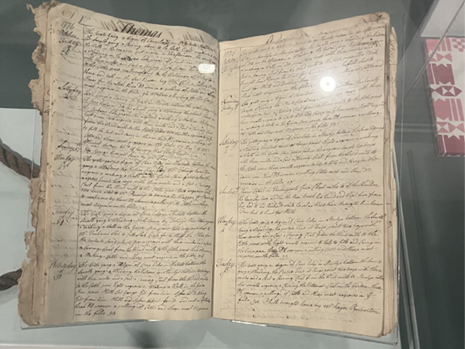
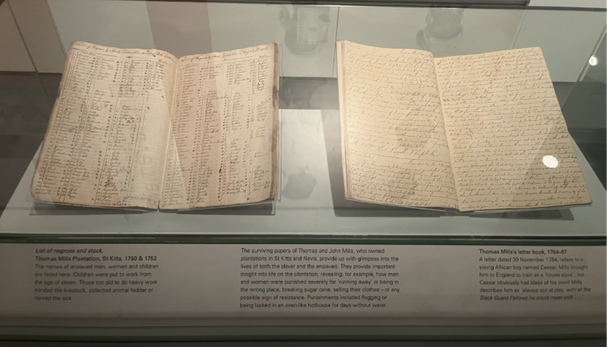
In 18th and 19th century Britain, enslaved Black people were referred to as “goods” and “chattel” in legal and commercial records. Black people were portrayed as subhuman, with their existence reduced to systems of exploitation that treated them as property for profit and entertainment. I recently visited the London Museum Docklands and saw plantation archives from Nevis and St Kitts; the accounts of the brutality experienced by enslaved Black people were chilling.
This pattern of dehumanisation has continued to influence the language used to describe Blackness and Black people over time: terms such as “Negro”, “Coloured”, “Blacks”, and many more offensive slurs all reflect specific historical contexts and power dynamics.
At the same time, language has also been repurposed. While researching this blog, I came across the concept of Political Blackness. In this context, the term "Black" - which simply meant non-white – was used by some grassroots anti-racist movements in the 1960s to 1980s as an empowering, collective political identity bringing together people from different racialised and ethnic backgrounds. This included South Asian women in Southall, who embraced Political Blackness as a symbol of solidarity and collective action against racism.

How categories create "the other"
Between the broad categories of whiteness and Blackness, many other classifications have emerged that further perpetuated hierarchies and the marginalisation (or “othering”) of certain ethnic groups. Outdated (depending on where you live in the world) terms such as "Coloured", "Mulatto", "Quadroon" and "Octoroon" were historically used to categorise people according to their skin colour or the proportion of their ancestry that was considered African, reflecting attempts to quantify identity in ways that upheld racial ordering. For example, a "Quadroon" typically referred to someone with one African grandparent.
At secondary school, I first encountered the term "half-caste" through the poetry of John Agard. Introduced during British colonial administration to describe people of mixed heritage, the term has long been criticised and understood to be a slur, for implying that someone is only half of a whole person. Through humour and satire, Agard expresses his contempt for the term, and exposes how absurd and dehumanising that idea is. In my next blog, I'll explore this topic in much more detail.
Nowadays, terms such as "mixed race", "mixed ethnic background" and "dual heritage" are more commonly used, although preferences vary between individuals and communities.
The power and responsibility of science
It is important to acknowledge the role science has played in shaping ideas about race and ethnicity. Throughout history, pseudoscientific theories such as eugenics and phrenology were used to legitimise racial hierarchies, presenting them as biological fact.
This does not mean that science itself is inherently harmful. Thanks to science, these theories have been discredited. However, their legacy highlights how scientific authority can be misused when it reflects unexamined social assumptions.
In addition, a major strength of scientific research is its capacity to reflect and challenge itself. When applied critically, social science can expose inequalities, deepen understanding of key issues, and support more equitable outcomes. But this requires careful reflection on the categories, methods, and assumptions that underpin it.
Why these histories matter for ethnicity data
As this blog has hoped to introduce, ethnicity data does not exist in a vacuum. The categories and labels used in datasets today are shaped by historical, social, and institutional contexts.
For researchers, this means asking not only what categories are present, but how and why they were created, if they have changed over time – and how they may differ across datasets. Without this awareness, there is a risk of reinforcing the very inequalities that research often seeks to address.
I want to emphasise that this blog is not intended to discourage people from having conversations about race and ethnicity because they are worried about getting the language wrong. These conversations should not be scary. They may feel uncomfortable at times, but discomfort can be an important part of learning and positive change.
I often wonder whether some of the language I use right now will one day be considered outdated or insensitive. That uncertainty should not stop us asking questions, reflecting on our assumptions, or challenging our own biases. Instead, I hope it encourages us to approach these conversations with curiosity, compassion and a willingness to keep learning.
My upcoming blogs will build on this curiosity by exploring the histories, experiences, and systems that shape ethnicity data. Together the series will examine how ethnicity is defined, recorded, and interpreted, and consider the implications this has for research and the communities represented within the data.